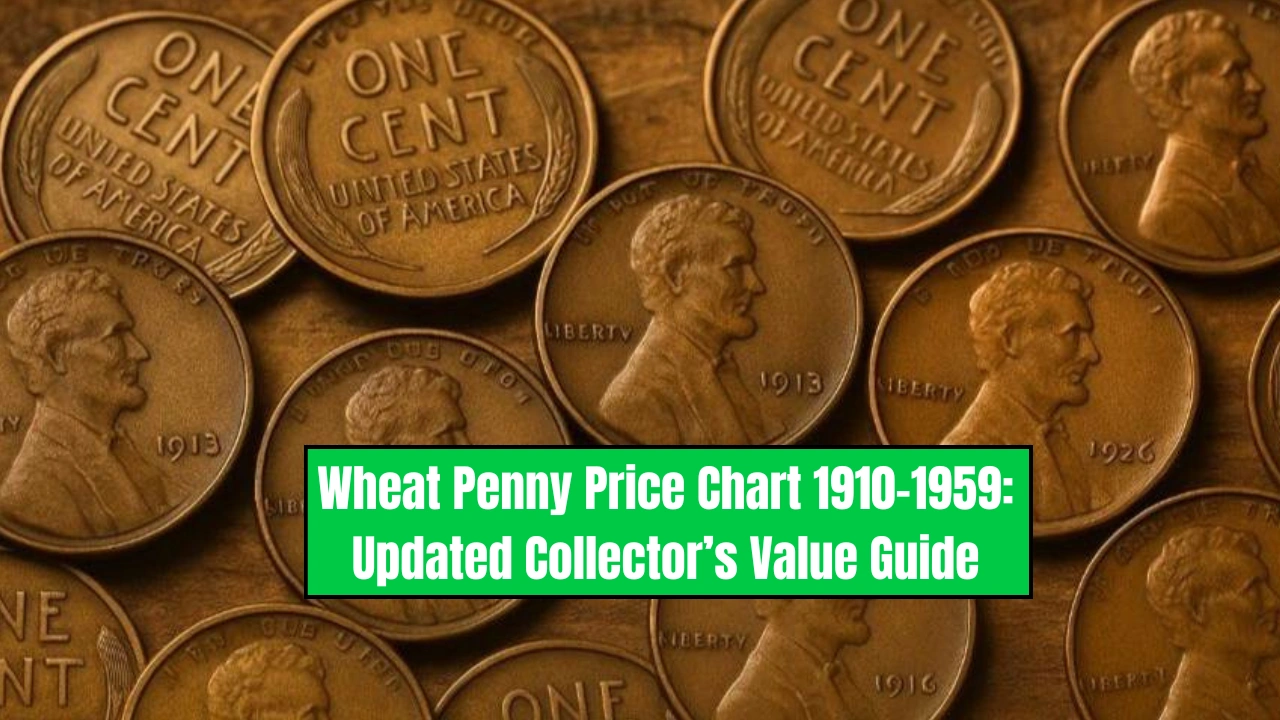
Wheat pennies produced from 1910 to 1959 remain a cornerstone of American coin collecting. Their timeless design featuring Abraham Lincoln on the obverse and wheat ears on the reverse has attracted generations of collectors and historians. These coins are not only a reflection of the United States history but also a treasure trove for numismatists seeking rare varieties, low-mintage issues, and high-grade specimens. With many coins still circulating in collections or hidden in old coin rolls, the potential to find a valuable Wheat penny is always exciting. The Wheat Penny Price Chart 1910–1959 helps collectors understand which coins carry the highest value, making it an essential resource for both beginners and seasoned enthusiasts. Collectors can use this chart to identify premium coins, track market trends, and make informed decisions when buying, selling, or trading.
Understanding the market for Wheat pennies requires recognizing the factors that influence a coin’s worth. From limited mintages and minting errors to prooflike surfaces and well-preserved strikes, each attribute can dramatically affect pricing. The Wheat Penny Price Chart 1910–1959 allows collectors to separate everyday circulated coins from truly rare pieces. Knowing which years and mint marks are most sought after can save time and money while building a complete set. For collectors who want to invest in coins that have both historical significance and financial value, this chart provides a clear path to spotting key dates and varieties that consistently outperform in the market.
Wheat Penny Price Chart 1910–1959
The Wheat Penny Price Chart 1910–1959 is a detailed guide for evaluating the value of pennies across five decades of minting. This chart identifies key dates, rare mint marks, and notable error varieties that drive collector interest. Early 1910s pennies often carry higher premiums due to their scarcity and the limited number of coins surviving in mint-state condition. Mid-century issues, particularly those with wartime anomalies or bold doubled dies, are equally valuable for collectors seeking investment-grade coins. Using this chart, collectors can prioritize coins based on rarity, condition, and historical significance. It also serves as a roadmap for anyone attempting to complete a full-year set or locate specific high-value examples that remain hidden in circulation. Understanding these trends and identifying rare varieties makes collecting Wheat pennies both enjoyable and potentially profitable.

Overview Table of Wheat Penny Values
| Year and Mint Mark | Key Characteristics and Collector Interest |
| 1911-S | Scarce San Francisco mint with strong collector demand |
| 1912-S | Limited survival, increasing long-term value |
| 1914-D | Low-mintage coin, valuable even circulated |
| 1917 Doubled Die | Dramatic visual doubling attracts collectors |
| 1922 No D | Missing mint mark, one of the most iconic errors |
| 1926-S | Difficult to find in full wheat-ear detail |
| 1931-S | Low-mintage key date, high appreciation potential |
| 1943 Bronze | Famous wrong-planchet wartime error |
| 1955 Doubled Die | Bold variety instantly recognized by collectors |
| 1958 Doubled Die | Extremely rare, very low confirmed population |
Key Value Drivers in Wheat Pennies
The value of Wheat pennies depends on several critical factors. Limited mintage coins tend to hold higher value, especially when few examples survive in excellent condition. Minting errors such as doubled dies, repunched mintmarks, and wrong-planchet coins increase collector interest and market demand. The condition of a coin also plays a significant role, with uncirculated or prooflike examples fetching premium prices. Coins that are well-struck with minimal wear, original surfaces, and strong luster consistently outperform average circulated pieces. Certification and provenance further enhance value, as verified grading reassures buyers and allows coins to command higher auction prices. Collectors who focus on coins with multiple high-value attributes can maximize their investment potential and enjoy a rewarding collecting experience.
1910–1919 Wheat Penny Highlights
The early decade of Wheat pennies remains highly sought after due to limited high-grade survivors and historical significance. Notable coins include the 1911-S from San Francisco, which is scarce and commands a strong premium. The 1912-S continues to see steady collector interest, while the 1913-S is challenging to locate with original luster intact. The 1914-D stands out for its rarity and historical importance, often fetching high prices even in circulated condition. The 1917 Doubled Die Obverse provides dramatic visual appeal, making it one of the most desirable coins from this period. Collectors who acquire these early-series coins with clean, unpolished surfaces often find them outperforming more common Wheat pennies.
1920–1929 Wheat Penny Value Markers
The 1920s introduced several coins with low mintages and error varieties that remain highly collectible. The 1922 No D penny is a legendary example, featuring a missing mint mark and considered one of the most famous error coins in American numismatics. The 1924-D is scarce in premium certified condition, while the 1926-S is prized for its full wheat-ear detail. The 1928-S appeals to set builders due to limited gem-quality examples. While many circulated coins from this decade remain affordable, top-grade specimens continue to rise in value, making this decade a strong focus for collectors seeking both rarity and long-term investment.

1930–1939 Wheat Penny Standouts
Depression-era Wheat pennies produced some of the most recognized collector staples and copper rarities. The 1931-S is an essential low-mintage key date that has consistently appreciated in value. The 1936 Doubled Die Obverse is visually striking and highly sought after by variety collectors. The 1937-D shares collector interest with the three-legged Buffalo nickel and often increases demand for related pennies. The 1939-S is less common in high mint-state finishes than casual buyers expect. Collectors seeking premium coins from this era prioritize strong strikes, original surfaces, and certified grading to maximize both enjoyment and financial potential.
1940–1949 Wheat Penny Premium Varieties
World War II reshaped coin production, resulting in some of the series’ most celebrated errors. The 1943 Bronze penny is a famous wrong-planchet example that attracts collectors worldwide. Overdates and repunched mintmarks from 1943 and 1944 Steel pennies are highly collectible. The 1946-S RPM variety continues to draw interest from specialists, while the 1949-S remains difficult to locate at true gem quality. Auction activity for these coins remains strong, particularly for authenticated wartime anomalies, demonstrating that historical context can significantly enhance the value of well-preserved specimens.
1950–1959 Late-Series Rarities
The final Mint-marked Wheat pennies from 1950 to 1959 feature some of the most elusive die varieties. The 1955 Doubled Die Obverse is instantly recognizable and widely sought after. The 1958 Doubled Die is extremely rare, with very low confirmed population figures. High-grade rolls from 1955-S and 1956-D remain popular among collectors looking for mint-state examples. Transitional errors from 1959 are closely monitored by advanced collectors. Well-preserved late-series coins continue to offer excellent opportunities for those hunting rare, high-quality specimens.

Wheat Penny Market Trends 2025 and Beyond
The market for Wheat pennies has grown steadily, with increasing demand for certified premium-grade examples from both early and late periods. Coins with bold doubled dies, transitional errors, and historical significance consistently outperform common circulated pennies. Online auctions have intensified competition for gem-quality coins, while new collectors from modern coin and bullion markets continue to fuel interest. Emphasis on certification, provenance, and rarity documentation ensures that the Wheat penny market remains strong, transparent, and rewarding for collectors of all experience levels.
Frequently Asked Questions
What is the most valuable Wheat penny from 1910 to 1959?
The 1943 Bronze penny and the 1955 Doubled Die Obverse are among the most valuable. Coins with rare errors or low mintages typically command the highest prices.
How can I determine the value of my Wheat penny?
Check the coin’s date, mint mark, condition, and any notable errors. Certified grading and provenance can significantly increase value..

Are Wheat pennies rare in circulated condition?
Most Wheat pennies are common in circulated condition, but key dates and error varieties remain rare even in lower grades.
Which decades have the highest-value Wheat pennies?
Early 1910s, 1920s low-mintage coins, and wartime 1940s pennies generally command higher premiums due to scarcity and historical importance.
Is it worth collecting Wheat pennies today?
Yes, Wheat pennies are historically significant, increasingly collectible, and can provide both enjoyment and financial return, especially for certified high-grade coins.