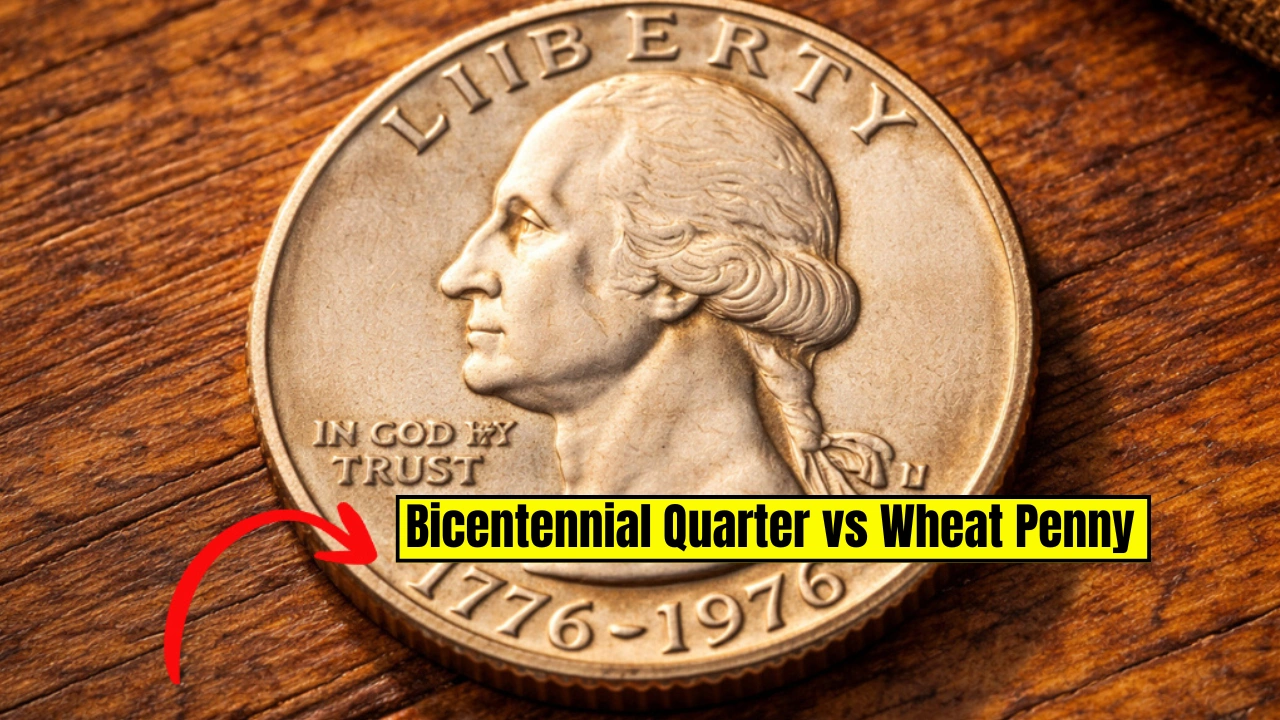
Even decades after their release, the 1976 Bicentennial Quarter and the classic Wheat Penny continue to capture the attention of coin collectors and casual savers alike. Both coins appear in old coin jars, forgotten drawers, and sometimes even in loose change, offering a sense of nostalgia and historical significance. The 1976 Bicentennial Quarter celebrates America’s 200th anniversary with a unique design that distinguishes it from regular quarters, while Wheat Pennies reflect early 20th-century craftsmanship and charm. For those interested in uncovering hidden value in everyday coins, understanding which of these vintage coins may hold more financial potential can turn an ordinary coin hunt into an exciting discovery.
Collectors continue to seek the 1976 Bicentennial Quarter for its historical appeal, unique design, and occasional surprises in the market. Even though billions were produced, certain versions still attract attention, particularly silver editions, uncirculated coins, and rare mint errors. Many collectors enjoy hunting for high-grade examples in estate sales, coin jars, or change received from stores. While most circulated Bicentennial Quarters hold only their face value, specific variations can sell for significantly more, making them a small but exciting investment for anyone interested in numismatics.
Why the 1976 Bicentennial Quarter Still Attracts Attention
The 1976 Bicentennial Quarter remains one of the most recognizable U.S. coins due to its patriotic drummer boy design created to honor the nation’s 200th anniversary. Coin collectors still actively look for this quarter in piggy banks, loose change, and estate collections. High-grade uncirculated coins often sell at premium prices, while silver versions from special mint sets can be worth hundreds of dollars. Even minor mint errors, such as double strikes or off-center designs, can turn an ordinary quarter into a collectible treasure. Many people are surprised to learn that a common Bicentennial Quarter could hide unexpected value. The coin continues to be a favorite for beginner and experienced collectors because it combines history, aesthetics, and the possibility of finding something truly special.

Overview Table: Bicentennial Quarter vs Wheat Penny
| Key Information | Details |
| Coin Name | 1976 Bicentennial Quarter |
| Mint Year | 1976 |
| Design Feature | Drummer boy reverse |
| Typical Circulated Value | Face value to a few dollars |
| Special Variety Value | $150 to $750 for silver or errors |
| Collector Interest | Moderate |
| Coin Name | Wheat Penny |
| Mint Years | 1909 to 1958 |
| Typical Circulated Value | 3 cents to several dollars |
| Special Variety Value | $50 to thousands for rare dates and errors |
Why Wheat Pennies Continue to Be a Collector Favorite
Wheat Pennies are a timeless favorite among coin collectors because they were minted from 1909 to 1958 and carry a distinct historical charm. The reverse design features two wheat ears that symbolize prosperity and growth, making them aesthetically appealing to collectors. Key dates, mint marks, and rare errors in Wheat Pennies often carry much higher value than the standard circulated coins. Coins like the 1909-S VDB penny or those with doubled dies are highly sought after and can be worth hundreds or even thousands of dollars. Even common Wheat Pennies now hold a small premium because fewer of them remain in circulation. This combination of historical importance, aesthetic appeal, and scarcity keeps Wheat Pennies at the top of many collectors’ lists.
Key Traits Collectors Look For in Both Coins
Collectors use specific traits to determine the potential value of both the 1976 Bicentennial Quarter and Wheat Pennies. Mint errors are particularly prized because they are rare and unusual. Coins with high-grade surfaces and minimal wear are more valuable. The silver composition of certain Bicentennial Quarters adds significant worth. For Wheat Pennies, low-mintage years and strong strike details are critical. Clear mint marks and well-defined designs enhance a coin’s appeal. By knowing what to look for, collectors can identify coins that might hold hidden value even before consulting a professional appraiser.
Which Coin Holds More Hidden Value Today
When comparing hidden value, Wheat Pennies generally outperform the 1976 Bicentennial Quarter. While the Bicentennial Quarter can reach higher values in silver or uncirculated forms, most coins are worth only face value. Wheat Pennies, on the other hand, consistently retain collector interest because even ordinary circulated coins carry modest premiums. Rare dates and error varieties can be worth hundreds or thousands, providing a higher chance of surprising returns. The combination of age, scarcity, and collector demand makes Wheat Pennies a reliable choice for those seeking hidden value in vintage coins.

Why These Coins Still Show Up in 2025
Both the 1976 Bicentennial Quarter and Wheat Pennies continue to surface due to old collections, coin jars, change machines, and estate cleanouts. People often find these coins decades after they were first minted. Wheat Pennies appear because they were saved by collectors or passed down through generations. Bicentennial Quarters continue to appear because of their massive original mintage and ongoing circulation. The rediscovery of these coins demonstrates that vintage coin collecting remains an active and exciting hobby.
The Nostalgic Appeal of Vintage Coin Finds
Finding a vintage coin evokes a strong sense of nostalgia. The 1976 Bicentennial Quarter represents a moment of national celebration and pride, while Wheat Pennies capture the early 20th-century history of the United States. Each coin tells a story about its era, its production, and the people who used it. Collectors enjoy the thrill of spotting rare variations in everyday change. Vintage coins provide not only potential financial value but also a tangible connection to the past that keeps collectors engaged year after year.
Bicentennial Quarter Discovered in a Junk Drawer Turns Out to Be Worth Far More Than Expected
Many collectors have shared stories of discovering a 1976 Bicentennial Quarter in a forgotten drawer or piggy bank and realizing its unexpected worth. These discoveries show that even coins in ordinary circulation can hold significant value under the right conditions. Uncirculated or silver editions often command premium prices, and error coins can be exceptionally valuable. The excitement of finding such coins reinforces why collectors continue to search for hidden treasures in old change and family collections.

Frequently Asked Questions
What is the typical value of a common 1976 Bicentennial Quarter?
Most common circulated Bicentennial Quarters are worth face value or a few dollars unless they are silver, uncirculated, or contain mint errors
Which coin has a higher surprise potential for hidden value?
Wheat Pennies usually have a higher surprise potential due to rare dates, errors, and collector demand even for circulated coins.
Where do collectors usually find these coins?
Collectors find them in old coin jars, piggy banks, estate sales, change machines, or loose change received from stores.

Are Wheat Pennies worth more than Bicentennial Quarters?
Generally, yes. Wheat Pennies, especially rare dates and error coins, often exceed the value of most Bicentennial Quarters in circulation.
How can I tell if a 1976 Bicentennial Quarter is valuable?
Check for silver content, uncirculated condition, or mint errors such as off-center strikes or doubled designs. Coins with these traits are more likely to carry premium value.